
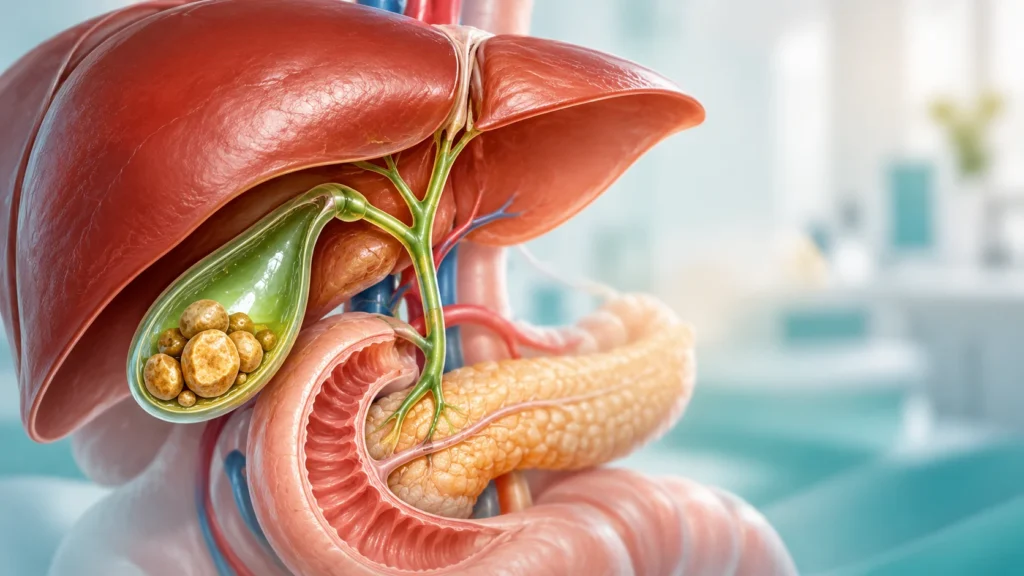
Gallstones are small, hardened deposits that form inside the gallbladder. Many cause no symptoms, but some block bile flow and cause significant abdominal pain. This guide explains the warning signs, tests and treatment options — including when surgery may be considered.
Stones without symptoms often need no immediate treatment.
Your clinician may also recommend blood tests.
Fever, jaundice or severe persistent pain needs urgent assessment.
What are gallstones?
The gallbladder is a small organ below the liver that stores bile, a digestive fluid. Gallstones can form from substances in bile, including cholesterol or bilirubin. They vary in number and size. A stone that does not obstruct bile flow may cause no noticeable problem.
What are the symptoms of gallstones?
When a stone temporarily blocks the flow of bile, it can cause biliary colic — often a steady pain in the upper-right or central abdomen. Pain may occur after meals and can last from around 30 minutes to several hours. Some people also experience nausea or vomiting.
Upper abdominal pain
Often beneath the right ribs or in the upper middle abdomen.
Episodes after eating
Attacks may develop after a large meal and last for hours.
Nausea or vomiting
Digestive symptoms can accompany an attack.
When should you seek urgent medical attention?
Seek urgent medical assessment for sudden severe or persistent abdominal pain, fever or chills, yellowing of the eyes or skin, dark urine, pale stools, or pain with repeated vomiting. These can indicate gallbladder inflammation, bile-duct blockage or pancreatitis. Do not delay emergency care to book a routine consultation.
How are gallstones diagnosed?
A clinician will discuss your symptoms and medical history and examine you. An abdominal ultrasound is commonly used to check for gallstones. Blood tests may help identify inflammation, liver or bile-duct problems. Additional imaging or procedures may be needed when a stone in the common bile duct is suspected.
Do gallstones always require surgery?
No. People with gallstones that cause no symptoms often do not need immediate treatment. Recurrent painful attacks, inflammation or related complications can make treatment necessary. The recommended approach depends on symptoms, ultrasound findings, other medical conditions and surgical risk.
Monitoring when appropriate
Incidental, symptom-free gallstones may be managed without an operation after medical review.
Laparoscopic cholecystectomy
For symptomatic gallstones, gallbladder removal by keyhole surgery is a common treatment. Open surgery may be needed in some circumstances.
Bile-duct stone treatment
If stones are trapped in the common bile duct, clinicians may recommend ERCP to remove them.
What happens during laparoscopic gallbladder surgery?
Laparoscopic cholecystectomy removes the gallbladder using a camera and instruments through small abdominal incisions under general anaesthesia. It is frequently possible to go home the same day, although recovery and hospital stay differ between patients. As with any operation, there are risks, including bleeding, infection and bile-duct injury, which your surgical team should explain.
Preparing for a surgical consultation
Bring previous ultrasound reports, relevant blood tests, a list of medications and a short record of your pain episodes. Ask about the likely cause of your symptoms, whether surgery is suitable, possible alternatives and the expected recovery process.
Frequently asked questions
Can gallstones go away without an operation?
Some people with symptom-free gallstones need no treatment. Medicines to dissolve certain stones are used only in selected circumstances and are not a routine substitute for surgery.
Is every right-sided abdominal pain caused by gallstones?
No. Several digestive and non-digestive conditions can cause similar pain. A clinical assessment helps determine the cause.
Can someone live normally without a gallbladder?
Most people can live normally after gallbladder removal. Temporary changes in bowel habits can occur, and individual recovery varies.
Who should decide whether surgery is needed?
A qualified clinician or surgical team should recommend treatment after reviewing symptoms, examination, tests and the person’s overall health.
Explore the related service
Learn more about clinical assessment and options for laparoscopic gallbladder surgery.
Medical references
Information reviewed against publicly available patient education from NIDDK: Symptoms & Causes, NIDDK: Treatment, and NHS: Gallstones.
This article is for general health education, not a diagnosis or a substitute for individual medical advice. Clinical content should be reviewed by the treating clinician before publication.